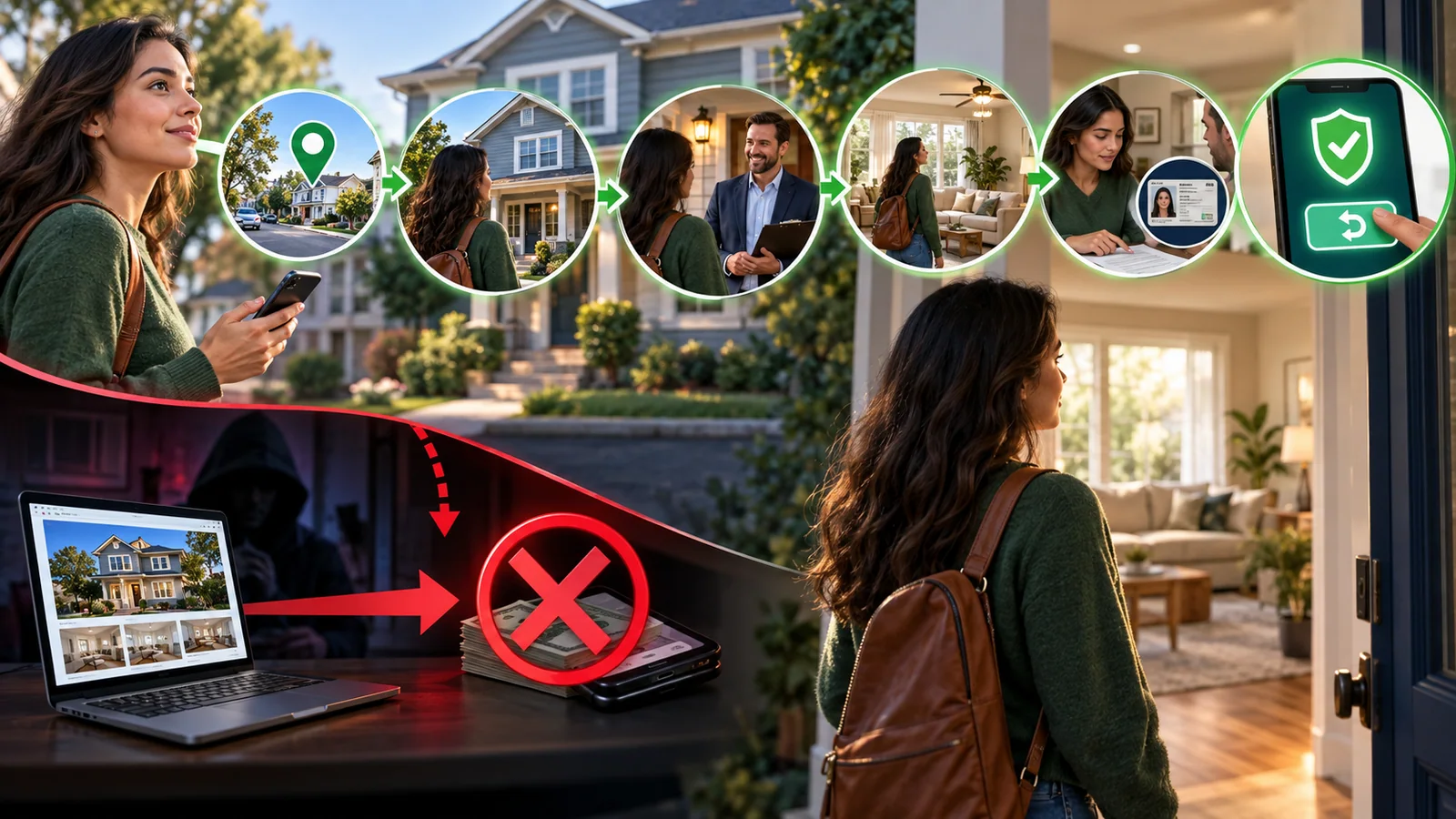
The Rental Listing May Be Real—and Still Belong to a Scammer
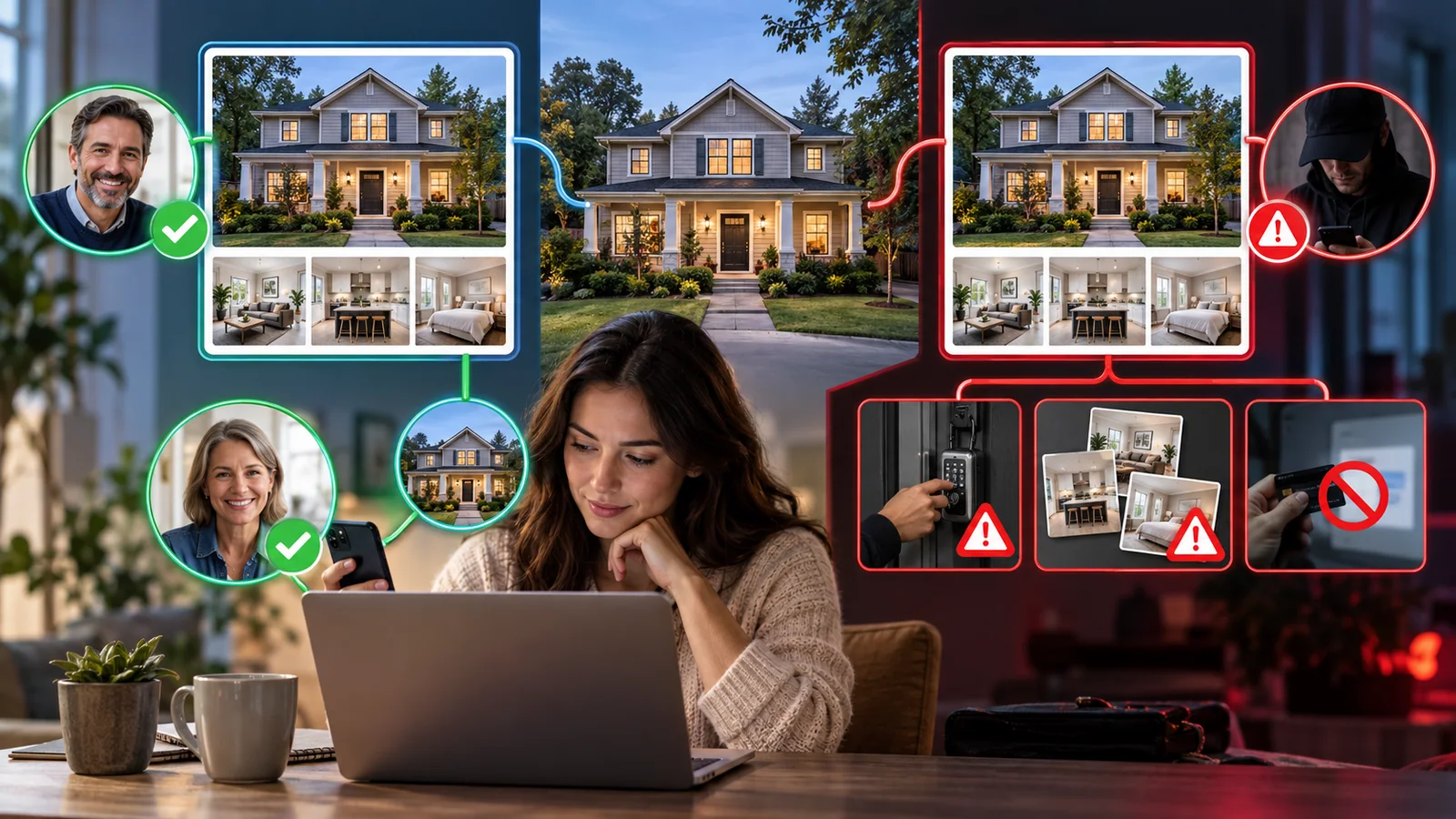
Image: House Leases
The most dangerous rental scam is not a badly written ad for an imaginary apartment. It is a polished copy of a real listing, complete with authentic photographs, a believable address, and sometimes even access to a self-tour lockbox.
The property exists. The person collecting the deposit may have no right to rent it.
Why the scam looks credible
The Federal Trade Commission reported in late 2025 that consumers had reported nearly 65,000 rental scams since 2020 and about $65 million in losses. In the 12 months ending June 2025, about half of people who reported a rental scam said it began with a fake Facebook ad.
Scammers copy legitimate listings, replace the contact details, and advertise elsewhere. Others exploit self-tour systems or send affiliate credit-check links that enroll applicants in recurring subscriptions. A clean photo set and a working door code therefore cannot establish ownership.
The verification sequence
Before paying an application fee, deposit, or first month’s rent:
- Search the full address in quotation marks and compare every active listing.
- Find the property manager or owner through an independent source—not the number inside the ad.
- Ask the named agent to confirm the listing and payment instructions.
- Inspect in person or have a trusted person do it. A video tour alone can be copied.
- Verify the written lease names the same legal person or entity you independently confirmed.
- Use a traceable payment method to the verified recipient.
If the price is dramatically below comparable homes, do not treat that as proof you found a secret deal. Treat it as a reason to add verification.
Payment methods are evidence
The FTC warns that gift cards, cryptocurrency, cash, and wire-transfer services are difficult to reverse. A landlord’s preferred method is not automatically fraudulent, but insisting on irreversible payment before independent verification is a major red flag.
The same is true of urgency. Legitimate rentals can move quickly; scammers deliberately use speed to prevent cross-checking. “Five other applicants are wiring now” is pressure, not documentation.
Protect the application packet
A rental application can contain enough information for identity theft: government ID, Social Security number, pay stubs, bank balances, employment data, and current address. Confirm the recipient before sending it. Avoid emailing unencrypted identity documents to an address created yesterday.
Ask what screening company is used, how data is stored, and when it is deleted. A legitimate process should explain why each item is needed.
Sources and limits
- FTC: Consumers have lost millions to rental scams
- FTC: Rental listing scams
- FTC: How to spot fake rental listings during a move
Lease, licensing, deposit, and disclosure rules vary by location. This is consumer education, not legal advice.
Key takeaway
The address and photos can be genuine while the contact is fake. Verify the person’s authority to rent the property through a separate channel before sending money or identity documents.
rental scamsfake listingstenant safety2026