Denied by a Tenant-Screening Algorithm? Ask for the Actual Report

Image: House Leases
A tenant-screening score can look objective while joining records from different people, repeating dismissed cases, or presenting old information without useful context. The fastest response to a denial is not an argument with the score. It is obtaining the data behind it.
“Adverse action” is broader than rejection
The Consumer Financial Protection Bureau explains that an adverse action can include denial, a larger security deposit, a co-signer requirement, or another less favorable condition based on a consumer or tenant-screening report.
When federal Fair Credit Reporting Act rules apply, the housing provider must identify the reporting company and explain the applicant’s right to request a free report and dispute inaccurate information. The CFPB says the free copy should be requested within 60 days of the adverse action.
What to inspect
Screening reports may combine credit history, rental history, eviction records, lawsuits, employment information, criminal records, registry checks, and a risk score selected for the landlord.
Check each item for:
- another person’s name, address, or date of birth;
- duplicate cases or debts;
- dismissed or sealed matters shown incorrectly;
- wrong outcome, balance, or date;
- records too old to report under applicable law;
- missing context that changes what the record means.
Do not send a general complaint that the score is unfair if you can identify a specific false field and attach the court order, payment record, lease, identity document, or correspondence that corrects it.
A practical dispute packet
Create one cover page listing each disputed item, the requested correction, and the attached evidence. Send it through the reporting company’s documented dispute channel and preserve confirmation. Notify the housing provider that a specific error is under dispute and ask whether the application can be reconsidered after correction.
If identity theft is involved, use the separate identity-theft process and protect accounts immediately.
Screening policy can create a second issue
Accurate data does not automatically make every policy lawful. The CFPB notes, for example, that a blanket refusal to rent to anyone with a criminal history may raise Fair Housing Act concerns. State and local protections can go further.
Applicants should separate two questions:
- Is the report factually accurate?
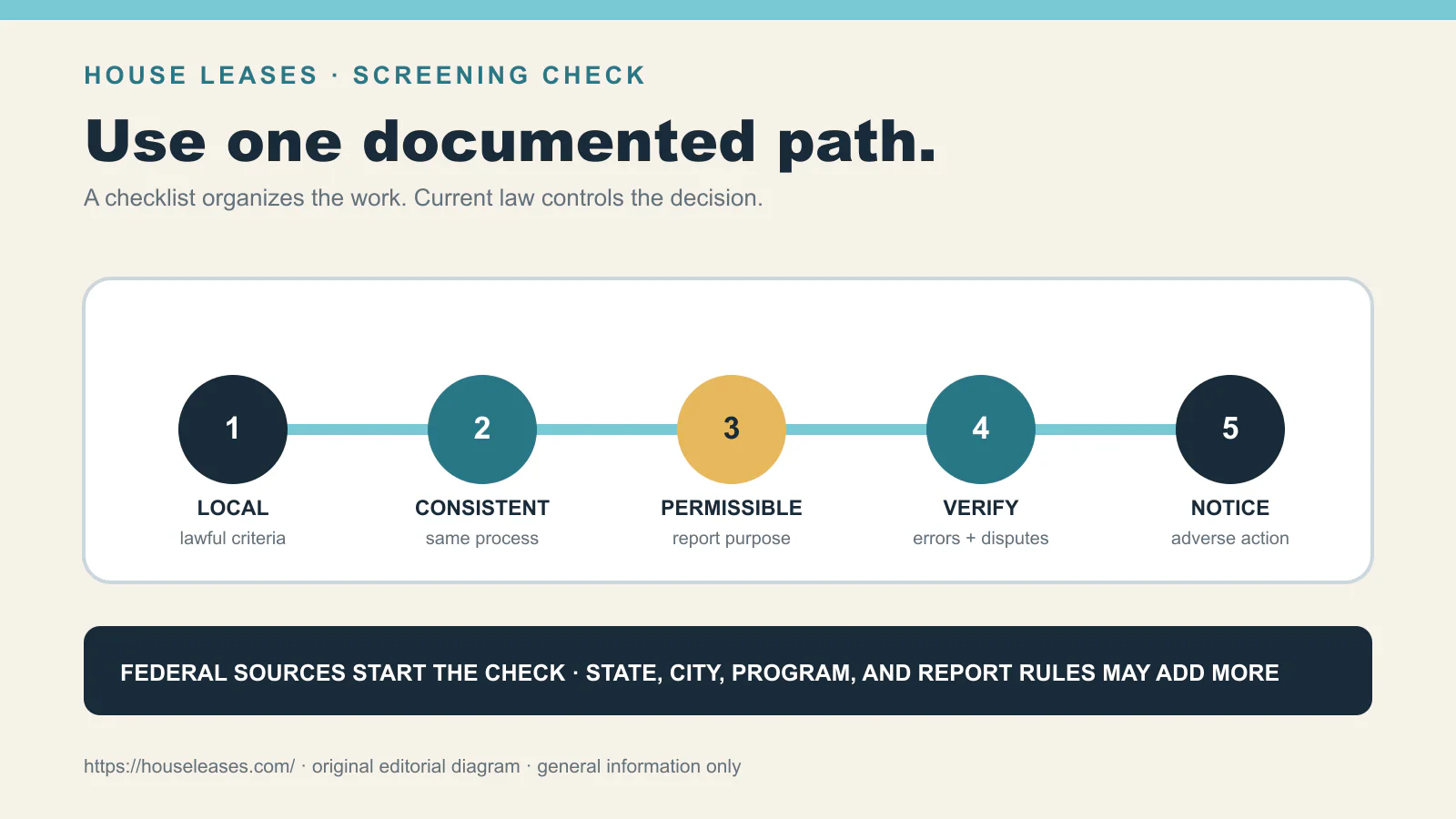
- Is the rule applied to that information lawful and consistently used?
Sources and limits
- CFPB: Review your rental background check
- CFPB: What to do after a screening-based denial
- CFPB: Tenant background checks
Federal, state, and local rules can differ. Deadlines matter. Seek qualified legal help for a specific dispute. This article is education, not legal advice.
Key takeaway
An algorithmic rejection is not the end of the evidence trail. Get the report, identify exact errors, dispute them with documents, and separately examine whether the screening policy itself complies with applicable law.
tenant screeningrental applicationFCRAadverse action