A Renter's Guide to Reviewing a Residential Lease
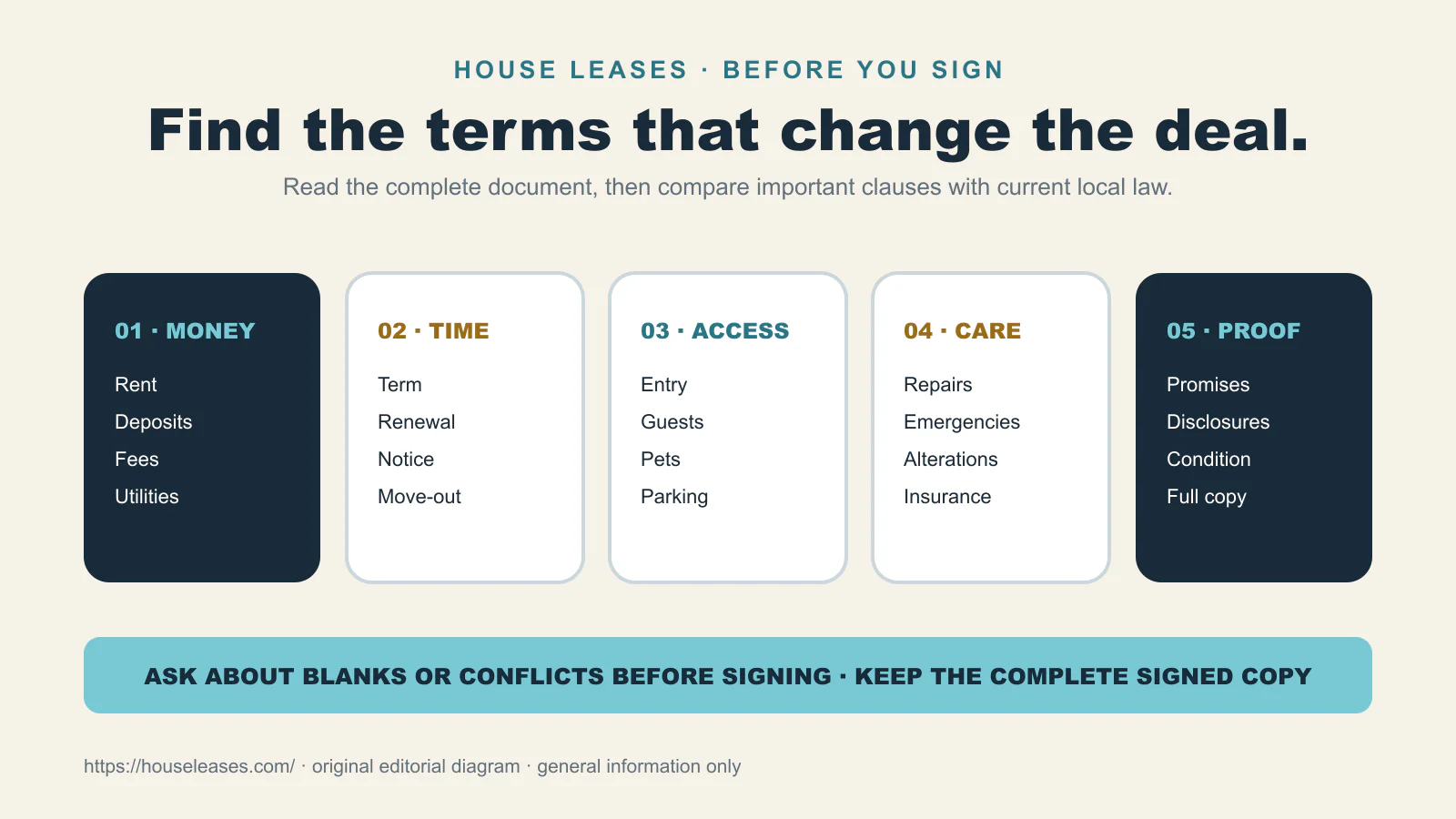
Image: House Leases
Legal source check: 27 July 2026. Rental law varies by state, county, city, and housing program.
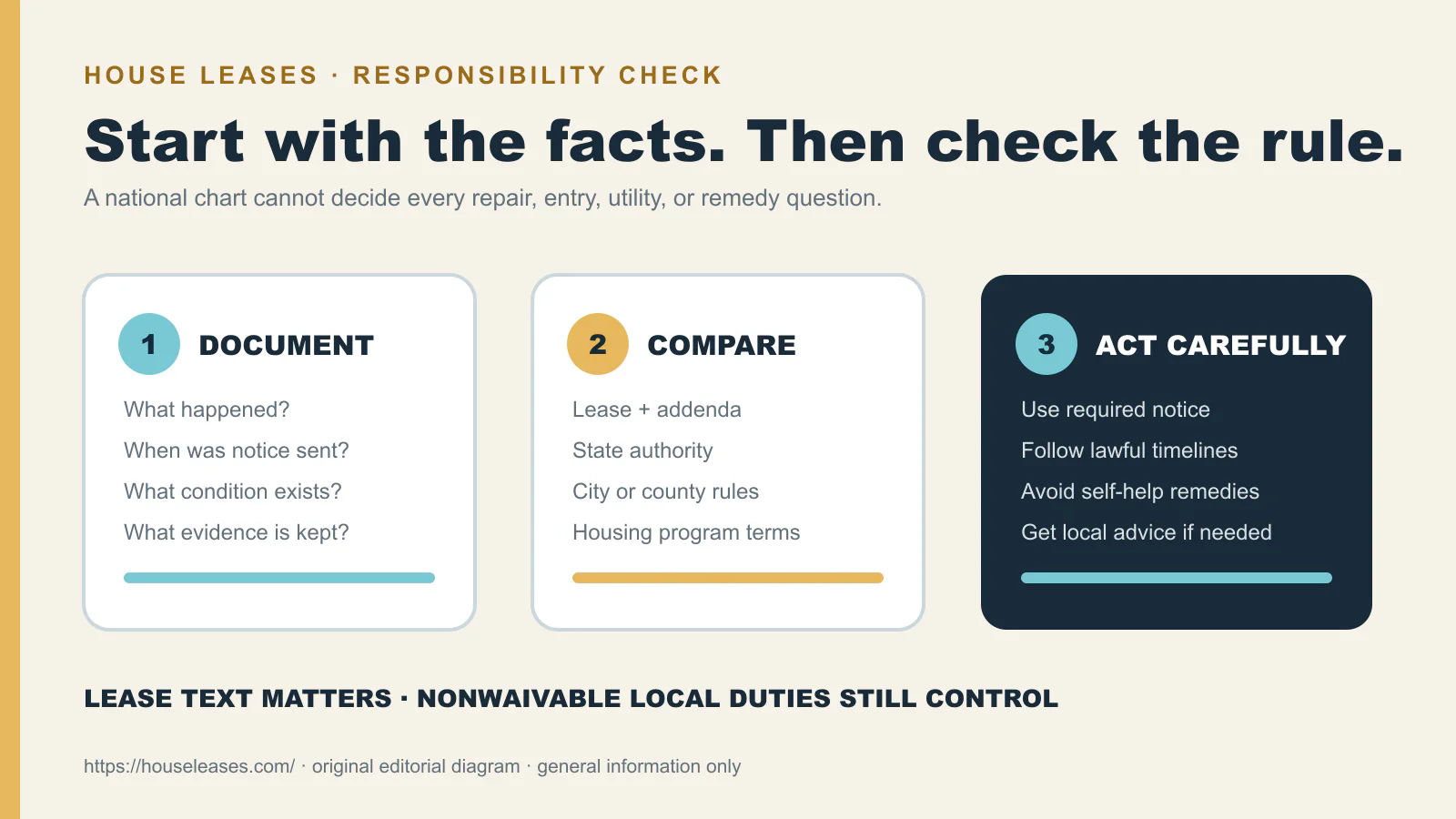
A lease is an important contract, but the signature page is not the whole legal picture. State and local rules may require disclosures, regulate charges and entry, or make certain terms unenforceable.
Use USAGov’s tenant-rights directory to reach the current state authority, then check any city or county rules that apply to the property.
Confirm the complete document
Before signing, collect:
- the lease and every addendum;
- incorporated rules or policies;
- required disclosures;
- the move-in condition form;
- the fee schedule;
- any written concession, repair promise, or special permission.
Do not sign blank fields. Ask which document controls if two provisions conflict.
Calculate the actual move-in and monthly cost
List the first month’s rent, deposit, application charge, recurring fees, utilities, parking, pet charges, and any required services. Check local law for restrictions, deposit handling, and refund deadlines.
A charge’s label does not determine whether it is lawful. Ask for the amount, timing, trigger, and refundability in writing.
Read the access and repair sections
Find the process for reporting routine repairs and emergencies. Identify who receives notice and how access is arranged.
Do not assume a national entry-notice period. State and local law may distinguish emergencies, requested repairs, inspections, showings, and other purposes. The same is true for tenant remedies after a repair problem.
Understand renewal and move-out
Locate:
- the fixed end date, if any;
- automatic-renewal language;
- notice required to end or decline renewal;
- early-termination terms;
- move-out inspection and key-return procedures;
- deposit-deduction and forwarding-address instructions.
Calendar the contractual notice date, then verify it against local law. A lease term cannot necessarily shorten a protection the law makes nonwaivable.
Put important promises in writing
If a repair, concession, parking space, pet permission, furnishing, or move-in date matters to the decision, ask that it be included in the signed lease or addendum.
That does not mean every oral promise is automatically meaningless. Enforceability depends on the facts and governing law. Written documentation is simply easier to review and prove.
Check federal protections that may apply
- HUD explains the Fair Housing Act.
- The EPA explains lead-disclosure requirements for most pre-1978 housing.
- The Department of Justice explains eligible servicemembers’ lease protections under the Servicemembers Civil Relief Act.
Additional protections can apply to subsidized, accessible, rent-regulated, or locally licensed housing.
Questions to resolve before signing
- What is the total amount due before move-in?
- Which charges can change, and with what notice?
- How are repairs and emergencies reported?
- When and why may the landlord enter?
- What ends or renews the tenancy?
- What condition evidence should each side keep?
- Which state, local, or program rules apply?
For a high-cost, unusual, or disputed term, seek advice from a qualified local lawyer or tenant organization before signing.
Key takeaway
Read the whole agreement, document material promises, and verify local rules. Avoid both extremes: a verbal assurance is not ideal evidence, but a signed unlawful clause is not automatically valid.
General legal information only, not legal advice.
tenant rightsrenterslease agreementrenting tipsleasing