Tenant Screening in 2026: A Compliance-First Checklist
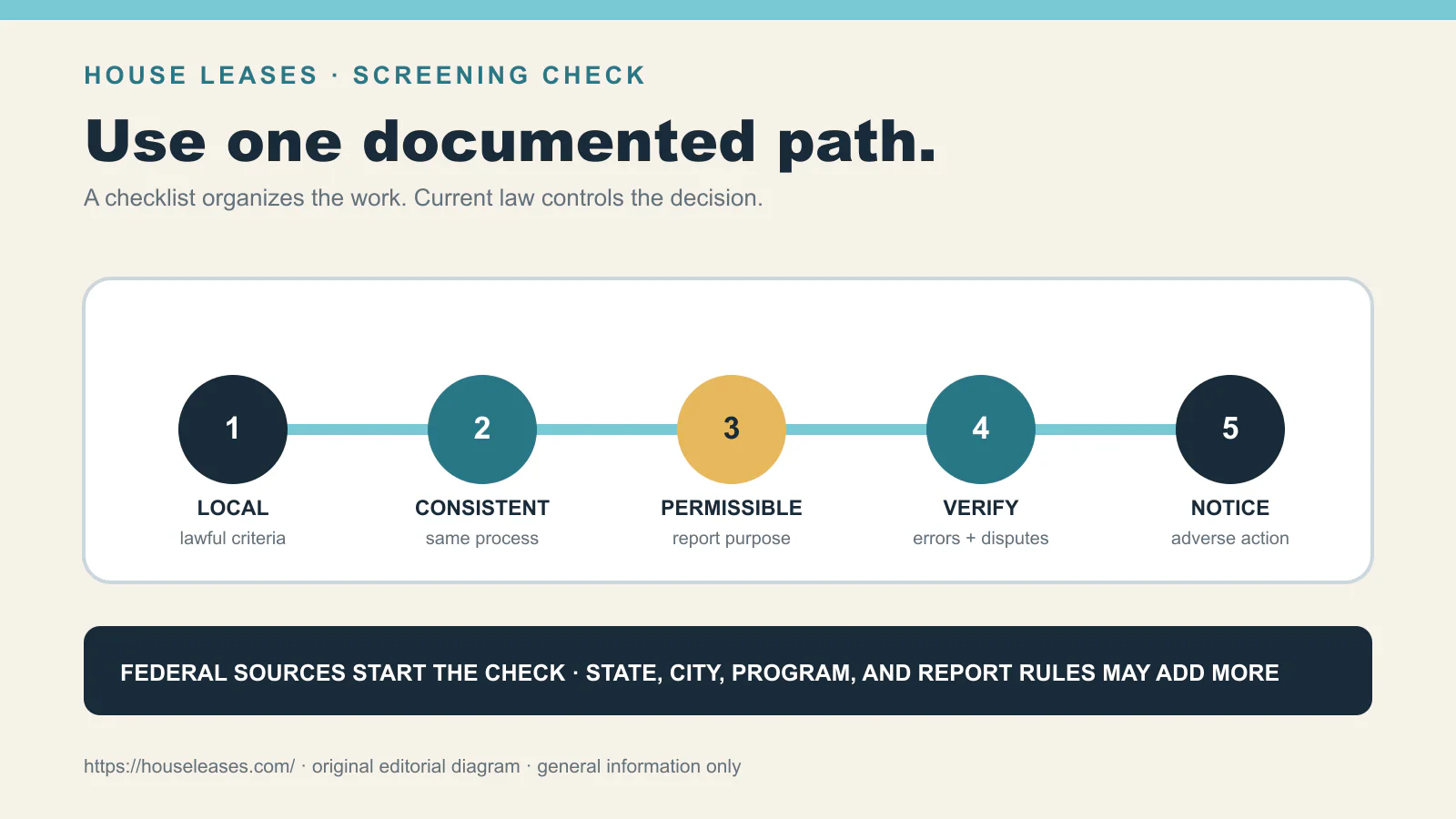
Image: House Leases
Legal source check: 27 July 2026. Screening requirements can also vary by state, city, housing program, and report type.
Tenant screening affects access to housing and can involve federally regulated consumer reports. A checklist can organize the process, but it cannot establish one lawful income ratio, criminal-history policy, or decision rule for every jurisdiction.
The FTC’s landlord guide to consumer reports and the CFPB’s tenant-background-check resources are the starting federal sources.
1. Define lawful criteria before advertising
Write down the information genuinely needed for the tenancy and how it will be assessed. Review the criteria under:
- the federal Fair Housing Act;
- current state and local fair-housing and tenant-screening rules;
- source-of-income or voucher protections, where applicable;
- requirements of any housing-assistance program.
Do not copy a 2.5× or 3× income threshold from a generic article and assume it is lawful or appropriate. Consider whether the documented standard measures the applicant’s ability to meet the actual obligation and whether local rules require a different approach.
2. Use the same documented process
Give applicants the same application information and evaluate comparable facts under the same written criteria. Record legitimate reasons for any departure. Consistency does not make an unlawful criterion lawful, but an improvised process creates additional risk.
3. Handle consumer reports under the FCRA
If a landlord obtains a credit, criminal, rental-history, or other tenant-screening report from a consumer reporting company, the federal Fair Credit Reporting Act may apply. Follow the FTC’s current guidance on:
- having a permissible purpose;
- certifying the purpose to the reporting company;
- using the report only for that purpose;
- securely disposing of consumer-report information;
- providing required notice after adverse action.
Separate state or local consent and disclosure requirements may also apply. Use the reporting provider’s current compliance materials and qualified legal review rather than a copied consent sentence.
4. Verify disputed or incomplete information
Names, addresses, records, and identity matches can be wrong or incomplete. The CFPB explains that applicants can dispute errors in tenant-screening reports. Build a process for receiving corrections rather than treating every returned record as conclusive.
5. Follow the adverse-action process
If information in a consumer report contributes to denial, a higher deposit, a co-signer requirement, increased rent, or another less favorable term, the FCRA adverse-action rules may apply.
The FTC guide explains the required notice content. The CFPB also provides applicant-facing guidance on rental denials based on screening reports. Do not replace the required notice with a vague rejection email.
Working checklist
- Current written criteria reviewed for the property’s jurisdiction
- Advertising and application reviewed for fair-housing compliance
- Same application process provided to comparable applicants
- Consumer-report provider and permissible purpose documented
- Required consent or disclosures completed
- Identity and disputed-information process available
- Decision and criterion documented
- FCRA-compliant adverse-action notice sent when required
- Records retained and disposed of under applicable requirements
Key takeaway
A defensible screening process is lawful, relevant, documented, and consistently applied. Federal FCRA and fair-housing rules are only the starting layer; local rules and housing programs may impose more.
General legal and compliance information only, not legal advice.
tenant screeninglandlordsfair housingbackground checksleasing